Introduction
A straight, well-aligned smile can improve your appearance, confidence, and oral health. However, crooked teeth, gaps, crowding, and bite problems can make some people hesitant to smile. Modern orthodontic dentistry offers several solutions to correct these concerns, with Invisalign and traditional braces being two popular options.
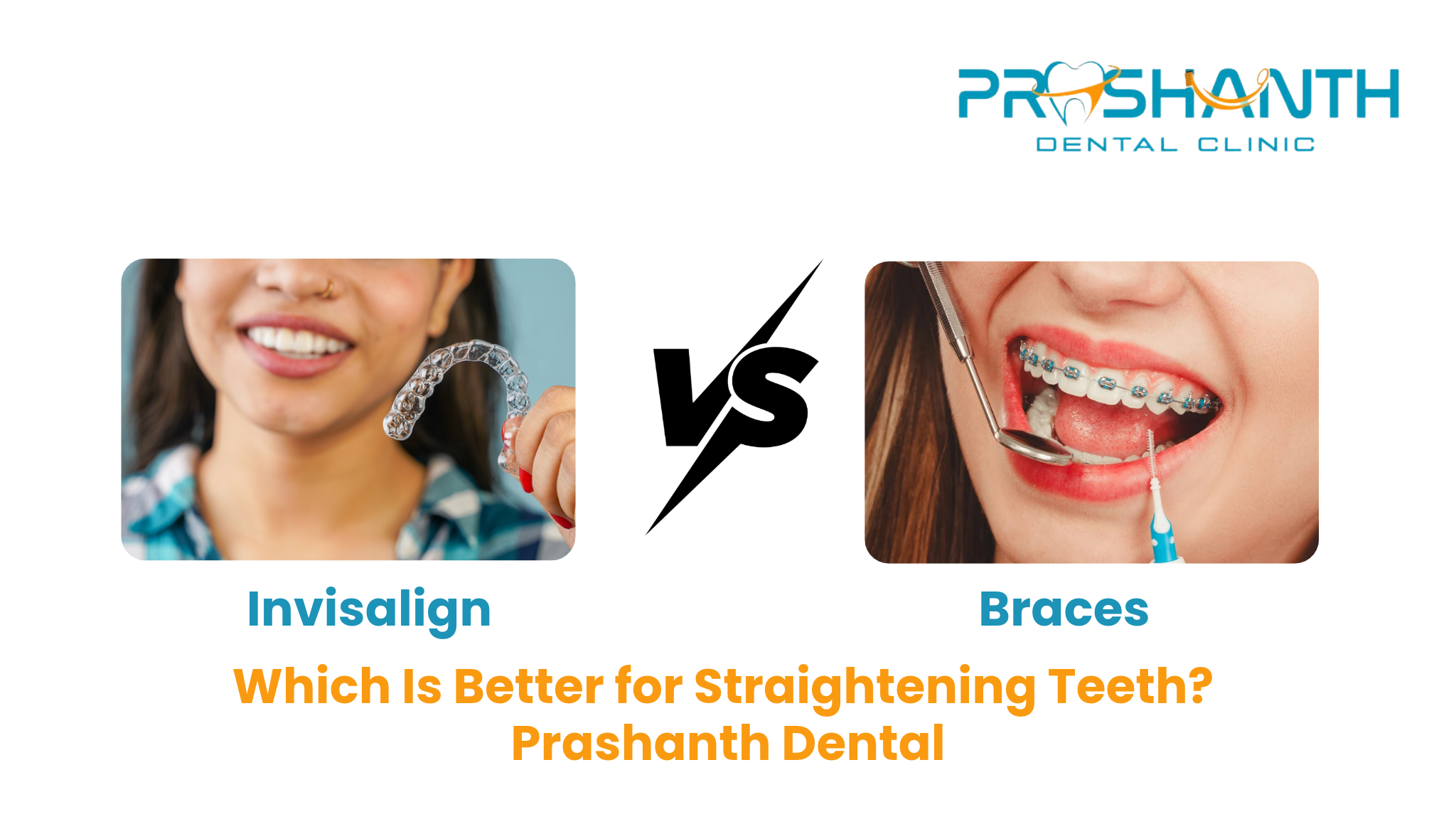
If you are considering teeth straightening treatment, you may be wondering which option is better. Invisalign uses transparent, removable aligners, while traditional braces use brackets and wires to gradually move teeth into their desired positions. Both treatments can deliver effective results when selected and managed appropriately.
At Prashanth Dental Clinic, patients can explore orthodontic solutions based on their dental condition, lifestyle, and smile goals. This guide compares Invisalign and braces, explaining their differences, benefits, limitations, costs, and treatment processes to help you make an informed decision.
What Is Invisalign?
Invisalign treatment is an orthodontic procedure that uses a series of custom-made, transparent aligners to gradually straighten teeth. These removable trays fit over the teeth and apply controlled pressure to guide them into planned positions.
Each set of aligners is designed for a particular stage of treatment. Patients progress through the series according to their dentist’s instructions.
Benefits of Invisalign
1. Nearly Invisible Appearance
One of the biggest advantages of Invisalign is its discreet appearance. The transparent trays are less noticeable than conventional metal braces, making them popular among working professionals, students, and adults who prefer a subtle orthodontic option.
2. Removable Aligners
Unlike fixed braces, Invisalign trays can be removed while eating, drinking anything other than water, brushing, and flossing. This makes everyday activities more convenient.
3. Easier Oral Hygiene
Since the aligners are removable, patients can brush and floss their teeth normally. This makes it easier to clean the surfaces between teeth compared with cleaning around fixed brackets and wires.
4. Smooth and Comfortable Design
Invisalign aligners are made from smooth plastic without traditional metal brackets or wires. Some patients experience temporary pressure or tenderness when starting a new set, but irritation to the cheeks and lips may be reduced.
5. Digital Treatment Planning
Digital scans and treatment-planning software can help the dentist map tooth movements and show a simulation of the anticipated alignment process.
What Are Traditional Braces?
Traditional braces are fixed orthodontic appliances used to correct crooked teeth, crowding, gaps, and bite-related problems. They consist of brackets attached to the teeth and wires that apply controlled pressure to move teeth gradually.
The orthodontist periodically adjusts the appliance to guide tooth movement throughout treatment.
Types of Braces
1. Metal Braces
Metal braces are a commonly used orthodontic option. They consist of metal brackets and archwires that help correct different types of dental alignment problems. They are generally durable and can be suitable for straightforward as well as complex orthodontic cases.
2. Ceramic Braces
Ceramic braces work similarly to metal braces but use tooth-coloured or translucent brackets. They are less noticeable than conventional metal braces and may appeal to patients who want a more discreet fixed option.
3. Self-Ligating Braces
Self-ligating braces use a specialised bracket mechanism to hold the archwire. They are designed to reduce the need for elastic ligatures, although treatment time and comfort still depend on the individual orthodontic case.
4. Damon Braces
Damon braces are a type of self-ligating orthodontic system. They use a sliding mechanism to hold the wire and are available as an option for patients seeking fixed orthodontic treatment.
Invisalign vs Braces: Key Differences
Both treatments aim to improve tooth alignment, but their design, maintenance, and daily requirements are different.
| Feature | Invisalign | Traditional Braces |
|---|---|---|
| Appearance | Transparent and discreet | Metal braces are visible; ceramic braces are less noticeable |
| Design | Removable clear trays | Fixed brackets and wires |
| Comfort | Smooth plastic; pressure may occur | Brackets and wires may irritate cheeks |
| Eating | Remove before meals | Certain hard and sticky foods should be avoided |
| Oral hygiene | Easier to brush and floss | Requires extra cleaning around brackets |
| Treatment control | Depends on aligner planning and patient compliance | Fixed appliance provides continuous force |
| Dental visits | Periodic progress reviews | Regular adjustment appointments |
| Suitability | Many mild to moderate cases and selected complex cases | Suitable for a broad range of orthodontic problems |
The most appropriate treatment depends on the complexity of your dental condition and your ability to follow the treatment instructions.
1. Which Looks Better: Invisalign or Braces?
Appearance is an important consideration for many patients, especially adults who interact with clients, colleagues, or customers regularly.
Invisalign offers a discreet appearance because its transparent trays are difficult to notice from a normal conversational distance. Patients can straighten their teeth without the prominent appearance of metal brackets.
Traditional metal braces are more visible. Ceramic braces provide a less noticeable alternative because their brackets are designed to blend with the natural tooth colour.
If appearance is your main concern, Invisalign may be an attractive option. However, the final decision should also consider your orthodontic requirements.
2. Which Is More Comfortable?
Comfort varies from person to person, but the design of each treatment creates different experiences.
Invisalign Comfort
Invisalign aligners have smooth surfaces and do not contain traditional metal brackets or wires. Patients may experience mild pressure when they begin wearing a new set of trays. This is generally part of the tooth movement process.
Braces Comfort
Traditional braces can cause temporary soreness, particularly after adjustments. Brackets and wires may also rub against the inner cheeks or lips, especially during the initial days of treatment.
Patients who prioritise a smooth and removable appliance may prefer Invisalign. However, both options require an adjustment period.
3. Eating and Food Restrictions
Eating habits are another important difference between Invisalign and braces.
With Invisalign, patients remove their aligners before meals and snacks. They can generally continue eating their preferred foods, provided they clean their teeth before putting the trays back in.
With traditional braces, certain foods should be avoided because they can damage brackets or bend wires. Hard, sticky, chewy, and crunchy foods may interfere with the appliance.
Patients wearing braces should follow their orthodontist’s dietary instructions to prevent unnecessary repairs and treatment interruptions.
4. Oral Hygiene: Which Is Easier to Maintain?
Maintaining good oral hygiene is essential throughout orthodontic treatment.
Invisalign makes brushing and flossing more straightforward because the trays can be removed. Patients should clean their teeth after meals before wearing the aligners again. The trays also need regular cleaning according to the dentist’s instructions.
Braces require additional attention because food particles and plaque can collect around brackets and wires. Special orthodontic toothbrushes, interdental brushes, and flossing aids may help clean difficult areas.
Regardless of the treatment, regular dental checkups and professional cleaning when recommended are important for maintaining healthy teeth and gums.
5. Invisalign vs Braces: Which Is Faster?
Treatment duration depends on the amount of tooth movement required, the complexity of the bite problem, and the patient’s response to treatment.
Invisalign treatment may take approximately 6–18 months in some cases, while traditional braces may take around 12–24 months. These are broad estimates rather than guaranteed timelines.
Mild alignment concerns may require less time, whereas complex crowding, significant bite problems, or extensive tooth movement can take longer.
Invisalign treatment also depends heavily on wearing the aligners for the prescribed number of hours each day. Removing them too frequently or not following the planned schedule can delay progress.
Your orthodontist can provide a more realistic estimate after examining your teeth and bite.
6. Which Is More Effective for Complex Dental Problems?
Both Invisalign and braces can correct several orthodontic concerns, but their suitability differs depending on the required tooth movements.
Invisalign May Be Suitable For:
- Mild to moderate crowded teeth.
- Small gaps between teeth.
- Selected overbite and underbite cases.
- Certain crossbite concerns.
- Minor alignment problems.
- Relapse after previous braces treatment.
Traditional Braces May Be Recommended For:
- Severe dental crowding.
- Complex bite correction.
- Significant tooth rotations.
- Certain difficult tooth movements.
- Cases requiring detailed control over individual teeth.
Modern clear aligner treatment can address a wider range of problems than in the past, but not every patient is a suitable candidate. An orthodontic assessment is necessary before selecting a treatment.
7. Invisalign vs Braces: Cost Comparison
Cost is an important factor when planning orthodontic treatment.
Invisalign may have a higher initial cost than conventional metal braces because it involves customised aligners, digital treatment planning, and a series of trays designed for individual tooth movements.
Traditional metal braces are often a more budget-friendly option. Ceramic and self-ligating braces may have different pricing depending on the materials and appliance system used.
The total treatment cost can vary based on:
- Severity of teeth misalignment.
- Type of orthodontic appliance.
- Duration of treatment.
- Number of aligners or adjustments required.
- Additional dental procedures, if needed.
- Follow-up appointments and retainers.
Rather than choosing a treatment based only on price, consider its suitability, expected results, maintenance requirements, and overall treatment plan. Ask your dentist for a complete cost estimate before beginning.
8. Can Adults Choose Invisalign or Braces?
Yes. Orthodontic treatment is not limited to children and teenagers. Adults can also improve their tooth alignment with Invisalign or traditional braces.
Many adults prefer Invisalign because the clear trays are discreet and can be removed during meals and oral hygiene routines. This can make treatment easier to manage alongside professional and social activities.
However, braces remain a suitable option for adults who require more complex tooth movements or prefer a fixed appliance that does not depend on remembering to wear aligners.
Age alone does not determine eligibility. Healthy gums, adequate bone support, and an appropriate treatment plan are important considerations.
9. What Is the Invisalign Treatment Process at Prashanth Dental Clinic?
If Invisalign is suitable for your teeth, the treatment generally follows a planned series of steps.
Step 1: Initial Consultation
The dentist examines your teeth, gums, bite, and overall oral health. Your smile goals and treatment expectations are also discussed.
Step 2: Digital Scanning
A digital scan or other suitable records are taken to create an accurate representation of your teeth. These records help with treatment planning.
Step 3: Personalised Treatment Plan
The orthodontic team plans the required tooth movements and determines the aligner sequence. A digital simulation may help you understand the anticipated changes.
Step 4: Wearing the Aligners
You receive your customised aligners and instructions on how long to wear them each day. Aligners are generally worn for around 20–22 hours daily, except during meals and oral hygiene.
Step 5: Progress Monitoring
Follow-up appointments help the dentist check whether your teeth are moving according to the treatment plan. You may receive additional aligners or refinements if required.
Step 6: Retainer Phase
After active treatment, retainers are usually prescribed to help maintain the corrected tooth positions. Wearing retainers as instructed is important because teeth can shift over time.
10. Why Choose Prashanth Dental Clinic for Orthodontic Treatment in Vijayanagar?
Choosing the right dental clinic is an important part of achieving a healthy, well-aligned smile. Orthodontic treatment requires careful evaluation, personalised planning, and regular monitoring.
Prashanth Dental Clinic in Vijayanagar offers orthodontic care, including Invisalign aligners, Damon braces, and self-ligating braces.
The clinic also highlights its use of digital dentistry, including 3D scanning and 3D printing, to support accurate treatment planning and dental care.
Patients can discuss their concerns, understand the available orthodontic options, and receive guidance based on their dental condition and smile goals.
If you are searching for Invisalign in Vijayanagar or braces treatment in Vijayanagar, a consultation at Prashanth Dental Clinic can help you understand which approach may be suitable.
Frequently Asked Questions
1. Is Invisalign better than traditional braces?
Invisalign may be better for patients who prefer a discreet, removable appliance and have orthodontic problems suitable for clear aligner treatment. Traditional braces may be more appropriate for certain complex alignment and bite issues. The best option depends on your dental condition.
2. Can Invisalign fix crooked teeth?
Yes. Invisalign can correct many cases of crooked teeth, including selected cases of crowding, spacing, and bite problems. However, severe or complex conditions may require braces or additional orthodontic procedures.
3. How many hours should I wear Invisalign aligners?
Most patients are instructed to wear Invisalign aligners for approximately 20–22 hours per day. They should generally be removed for eating, drinking anything other than water, and brushing and flossing. Follow your orthodontist’s specific instructions.
4. Are braces more effective than Invisalign?
Traditional braces can offer precise control for many complex tooth movements. However, Invisalign is also effective for a wide range of orthodontic concerns. Neither option is universally better; treatment suitability depends on the patient’s teeth and bite.
5. Can I eat normally with Invisalign?
Yes. You can generally eat your regular foods after removing your aligners. Clean your teeth before putting them back in. Avoid eating while wearing the trays because this can damage them.
6. Do Invisalign aligners affect speech?
Some patients notice a slight change in speech when they first start wearing aligners. This usually improves as they become accustomed to the trays.
7. Do I need retainers after Invisalign or braces?
Yes. Retainers are generally recommended after orthodontic treatment to help maintain the new tooth positions. Your dentist will explain how frequently and how long you should wear them.
8. Which is more affordable: Invisalign or braces?
Traditional metal braces are generally more affordable than Invisalign. However, the total cost depends on the complexity of the case, appliance type, treatment duration, and additional requirements.
Conclusion
Both Invisalign and traditional braces can help straighten teeth and improve smile appearance. Invisalign offers a discreet and removable alternative for patients who prefer flexibility, easier oral hygiene, and fewer visible orthodontic components. Traditional braces remain a reliable option for a broad range of alignment and bite problems, including many complex cases.
The best treatment is not necessarily the most popular or expensive one. It is the option that suits your dental condition, lifestyle, treatment expectations, and ability to follow the required care routine.
If you are considering Invisalign or braces in Vijayanagar, consult the orthodontic team at Prashanth Dental Clinic. A professional assessment can help you choose an appropriate treatment plan and take the first step towards a healthier, straighter smile.
Clinic Details
Clinic Name: Prashanth Dental Clinic
Location: Opposite Vijayanagar Metro Station, Vijayanagar, Bengaluru, Karnataka, India
Phone: 080-23352628
Website: https://prashantdentalclinic.com/